


“Textiles woven with care, culture, and identity”: How Marogmi reconnects with heritage through Caribbean-inspired homeware
After growing up surrounded by striking colours and traditional textile crafts, Marcia Michael founded Marogmi to return to creativity – and her sense of heritage. Through Caribbean-inspired homeware, she shows why home is the most powerful place to honour your roots.
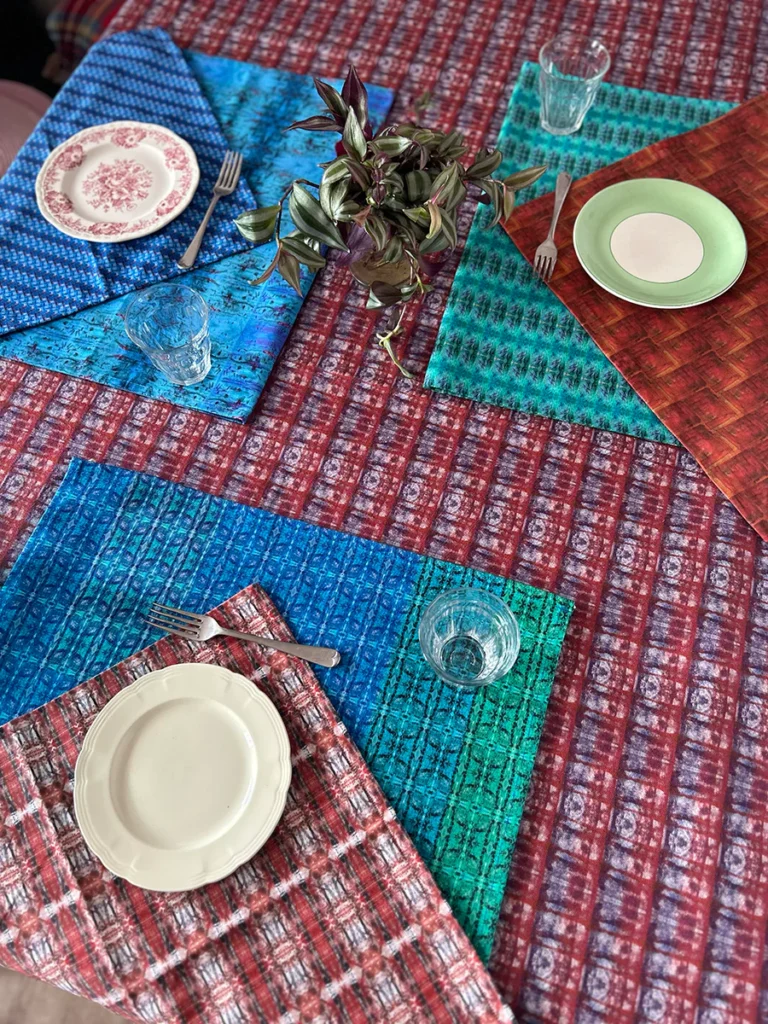
Tell us about Marogmi in your own words.
It began around the kitchen table. Growing up surrounded by fabrics that carried more than just function – textiles woven with care, culture, and identity – I felt a deep pull to create something that honoured that legacy, but with a modern rhythm.
That feeling became Marogmi: a textile design brand rooted in storytelling, memory, and home. Each piece is an invitation to reconnect with the small but significant rituals of daily life – laying a table, folding a napkin, sharing a moment. These are the quiet acts that build connection.
What kind of Caribbean-inspired homeware do you create?
Launched in 2022, Marogmi is a UK-based studio specialising in homeware that reflects the colours, textures, and patterns of Afro-Caribbean culture. Inspired by traditional techniques like batik, weaving, and dyeing, our designs reinterpret these practices through a contemporary lens, using digital printing to translate heritage into something fresh, fluid, and emotionally resonant.
Our collection – tea towels, napkins, tablecloths, coasters, wall hangings – is crafted in small batches using organic and natural fabrics. Each item is multifunctional, beautiful, and made to last. We believe that even the most practical objects should carry soul, inviting you to slow down, make intentional choices, and surround yourself with creativity that feels personal and purposeful.

What was the moment that inspired you to launch Marogmi?
The spark came from a longing to reconnect with my heritage, with my creativity, and with the deeper meaning of home. I’ve always been drawn to textiles and the stories they hold, but I noticed a gap in the market for homeware that felt both elevated in design and rich in cultural context.
I realised textiles could offer more than decoration: they could bring tradition into the present, create emotional resonance, and encourage people to be more intentional in how they shape their spaces. That moment of clarity became the foundation for Marogmi. I wanted to create objects that feel treasured: pieces to be used every day, but loved deeply enough to pass down.
How does your Caribbean heritage shape Marogmi?
It’s present in the vibrant colour palettes, the layered symbolism, and the sense of rhythm that guides each design. I grew up immersed in a culture where textiles weren’t just fabric: they were legacy, celebration, and community all woven together.
With Marogmi, I honour that lineage while bringing it into a new conversation. I take traditional visual languages and reimagine them through digital printing and contemporary design. It’s a bridge between generations, paying homage to the past while inviting new interpretations. Each pattern is a piece of cultural memory made tactile, functional, and beautiful for today’s home.

Why did you choose Caribbean-inspired homeware as a way to express your heritage?
Home is where culture breathes. It’s where we gather, cook, celebrate, and find comfort. Choosing homeware was instinctive because textiles play such an intimate role in everyday life. Through home textiles, I can infuse the essence of heritage into people’s daily rituals in a way that feels both accessible and profound. It’s about embedding story and identity into the rhythm of ordinary life.
What type of customers love your products?
Our customers are people who value craftsmanship, culture, and sustainability. Often creatives, hosts, homemakers or intentional gift-givers, they seek pieces that tell a story, more than just serve a function.
They’re drawn to the way our products merge tradition with modern design. They love that every piece has a soul and a backstory, and that it adds warmth and individuality to their spaces, whether they’re decorating a kitchen, curating a table for guests or choosing a meaningful gift for someone they love.

What’s your personal favourite product and why?
That’s a hard choice and it changes often. But I always return to our tablecloths. They’re at the heart of what Marogmi is about: bold design, versatility, and cultural storytelling. What I love most is how they can be reimagined, depending on your space, your mood or your need.
A tablecloth might begin its life on the dining table, but it doesn’t end there. It can be draped over a sofa as a throw, hung as an impromptu curtain, laid at the foot of a bed or even styled as a shawl or wrap. I design with movement and multi-use in mind. When a piece can shift with you, it becomes more than an object. It becomes part of your lifestyle and, in many ways, part of your story.
What’s been your proudest moment in the business?
In 2024, we were awarded the Modern Maker Award by BizBubble, recognising our commitment to craftsmanship, cultural heritage and innovation in homeware. Soon after, we were also featured by LUXlife Magazine for our distinctive approach to design. In 2025, we were proud to join Design-Nation, a platform for excellence in craft and design.
These moments affirmed that there is a place for slow, culturally rooted, and emotionally intentional work in the design world. It wasn’t just recognition: it was encouragement to keep going, keep evolving and keep creating with purpose.

What’s a dream milestone for the future?
A true milestone would be to see Marogmi featured in cultural and hospitality spaces like boutique hotels, museum cafés or community venues that celebrate both design and heritage. I want our textiles to live in environments where stories are told, where culture is honoured, and where beauty is part of the everyday experience.
But beyond visibility, my dream is to expand the definition of cultural textiles. At Marogmi, we are rooted in tradition, but we’re not limited by it. We use digital printing as a tool of innovation, reinterpreting age-old techniques like batik, resist dyeing, and woven symbols into something completely modern. It allows us to experiment, to play, to honour and evolve.
What do you want people to feel when they see something by Marogmi?
I want people to feel that when they own a Marogmi piece, they’re holding something timeless, but also forward-thinking. Whether it’s a tablecloth for family dinners or a napkin passed through generations, each item is created to carry memory, meaning, and a sense of home.
Ultimately, the dream isn’t just about growth: it’s about impact. I want Marogmi to inspire people to live more beautifully, more intentionally, and more connected to culture, through design that resonates. If someone finishes reading this and thinks, “I need that energy in my home,” then we’re already halfway there.
–
Jamii members get 15% off Marogmi – Find out more